
Restorative FEA: Designing Dental Restorations That Endure Real Oral Mechanics
Direct restorations, full crowns, bridges, and full-arch rehabilitations face years of mechanical stress—from everyday chewing forces to parafunctional habits like bruxism. Materials may appear strong in isolation but perform differently when bonded to natural tissues under dynamic conditions. Our Restorative FEA service addresses this gap.
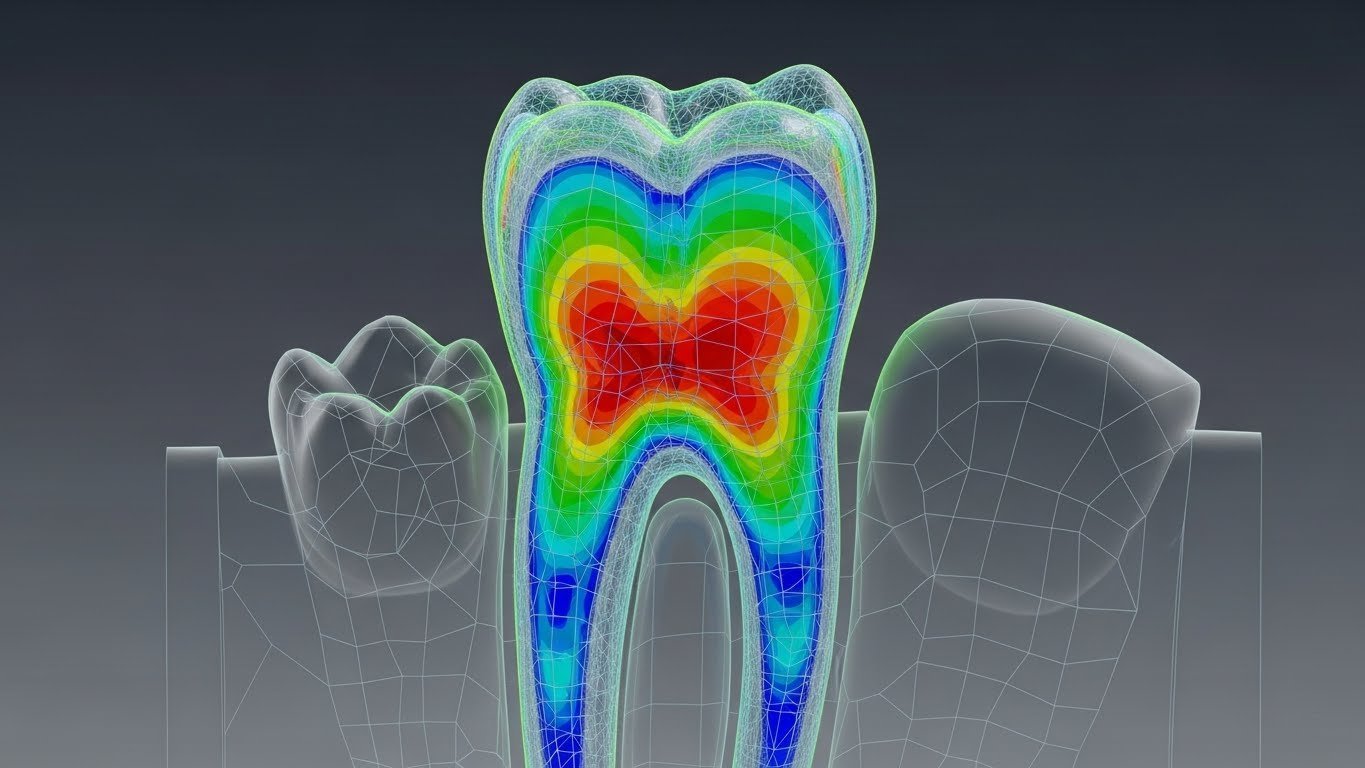
We model every layer involved in a restoration: enamel, dentin, adhesives, cements, ceramics, composites, metals, PEEK frameworks, and implant-supported structures. Each layer receives precise mechanical and thermal parameters to match real clinical behavior.
Our analyses cover:
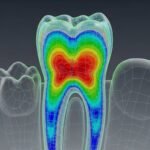
• Deformation and micro-leakage risk at adhesive interfaces
• Fatigue life under long-term cyclic loading
• Crown thickness influence on fracture resistance
• Ceramic vs. zirconia vs. composite performance
• Wear mapping for occlusal surfaces
• Failure modes in bridges and full-arch prostheses
• Bite force distribution changes after rehabilitation
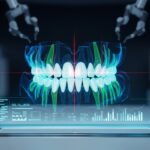
We simulate thousands of chewing cycles to predict how the restoration behaves after months or even years of use. This allows us to detect weak points before the clinician ever prepares the tooth or prints the prosthetic framework.
Manufacturers benefit by refining ceramic compositions, improving framework designs, and validating new materials. Clinicians gain actionable data that guides material choice, crown thickness, bonding strategy, and occlusal design.
In short, Restorative FEA transforms restorative dentistry into a fully measurable, scientifically validated process.